Savage Soccer Performance Training
Newark, DE
6 college commits across D1 and D2 — boys and girls
Recent Soccer Commits Trained at Savage
TJ Hastings
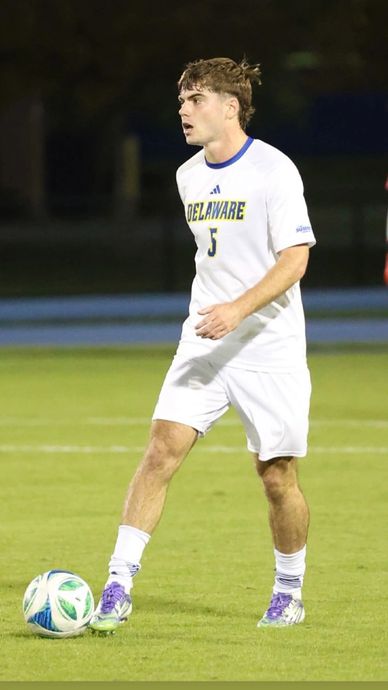
University of Delaware (D1)
Tanner Brentlinger

Tiffin University (D2)
Billy Burge
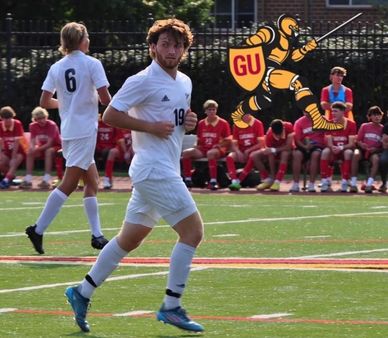
Gannon University (D2)
Gabby Marte
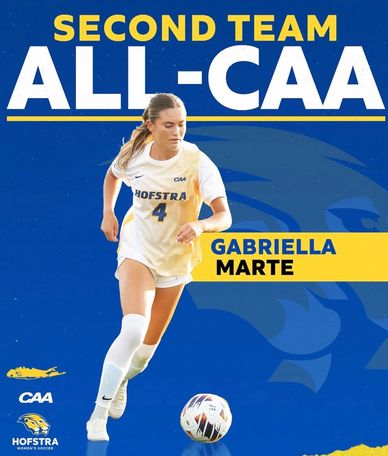
Hofstra University (D1)
Ashley Brentlinger
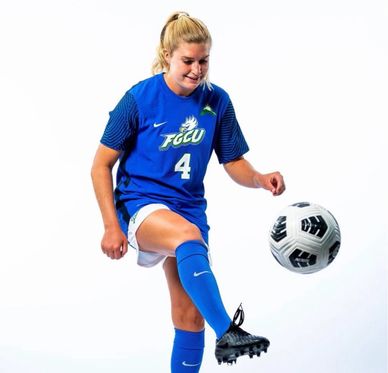
Florida Gulf Coast University (D1)
Zach Bittner

Queens College
What Soccer Really Demands Physically
Soccer is a repeated sprint sport played on top of a high aerobic base. Over 90 minutes a player covers 6 to 8 miles, but the moments that decide games are the short ones: a 10 yard sprint to the ball, a hard cut to lose a defender, a sudden deceleration before a tackle, a single leg push off to strike or recover.
The body has to do all of that hundreds of times in a match, then reset and do it again two days later. Sprint speed, acceleration, change of direction, single leg strength, and conditioning built for the sport are what separate players who finish strong from players who break down.
Common Injuries & Movement Patterns We Monitor
Soccer carries some of the highest non contact injury rates in youth sports. Most of it traces back to the same handful of movement patterns that show up long before something tears.
- ACL injuries, especially in female athletes, tied to landing mechanics, single leg stability, and hip control
- Hamstring strains from sprinting at high speed, often late in matches when fatigue stacks up
- Groin and adductor strains from kicking, sliding, and rapid change of direction
- Ankle sprains from cuts, contact, and uneven field conditions
- Shin splints and overuse irritation from training volume without recovery
- Hip flexor and quad tightness that pulls on the lower back over a long season
Asymmetry side to side, weak glutes, poor single leg balance, and limited ankle and hip mobility are some of the first things we screen at every evaluation.
How We Train Soccer Athletes
Our training is built around the actual demands of the sport. We don't just lift weights. We develop the specific qualities that translate to first step quickness, top end speed, durability through a long season, and the ability to keep playing the way she or he plays at minute 90.
- Acceleration & Sprint Speed: First step quickness and top end speed work, laser timed, so we know what's actually getting faster. The 5 to 30 yard zone is where soccer is won.
- Single Leg Strength & ACL Resilience: Almost every meaningful action in soccer happens on one leg. We build single leg strength, landing mechanics, and hip control to protect the knee and produce more force on the field.
- Change of Direction & Deceleration: The ability to stop, plant, and re accelerate in a different direction, repeatedly, without breaking down. This is where most non contact injuries actually happen.
- Conditioning Built for Soccer: Repeated sprint conditioning that matches the work to rest pattern of a real match, not steady state running. Trains the system the sport actually uses.
- Mobility & Recovery: Hip, ankle, and thoracic mobility plus targeted soft tissue and recovery work. This is what keeps an athlete training hard through an overlapping high school and club calendar.
Every program is individualized based on the athlete's position, age, season, and current physical condition.
Who This Is For
We train soccer athletes from middle school through college, boys and girls, across every position on the field. Goalkeepers, defenders, midfielders, and forwards each carry different physical demands, and we program accordingly.
Our players come from Caravel Academy, Salesianum, Appoquinimink High School, Padua and other Delaware soccer programs, plus club and travel teams across the region.
Soccer Training FAQ
ACL injuries are one of the biggest issues in youth soccer, especially for female athletes. We can't promise zero risk, no one honestly can, but the work that has been shown to reduce ACL injury rates is exactly what we already do every session: single leg strength, landing mechanics, hip and glute control, and deceleration training. It's built into the program, not bolted on.
A regular gym hands an athlete a treadmill and a few machines and hopes for the best. Savage builds programs around the athlete's sport, position, age, and season. Every athlete gets coached on every rep. There's a reason 6 of our soccer athletes have committed to college programs across D1 and D2.
No, if it's programmed right. The total load matters, not just the number of activities. We build the strength training around the practice and game schedule so it supports what they're doing on the field instead of fighting it. In most cases, athletes who add structured strength and speed work feel better, not worse, because they get stronger and more resilient than the practice volume alone makes them.